Slow to Speak, Slow to Wrath, Stronger Than You Think

The world often defines strength the wrong way.
Strength is usually pictured as being loud, quick, forceful, and impossible to challenge. The strong person is seen as the one who speaks first, reacts fast, dominates the moment, and never appears vulnerable.
But biblical strength looks different.
Sometimes the strongest person in the room is the one who does not rush to speak. The one who does not let anger take over. The one who can feel emotion rising and still choose restraint.
That kind of strength is quiet, but it is real.
Bible Verse
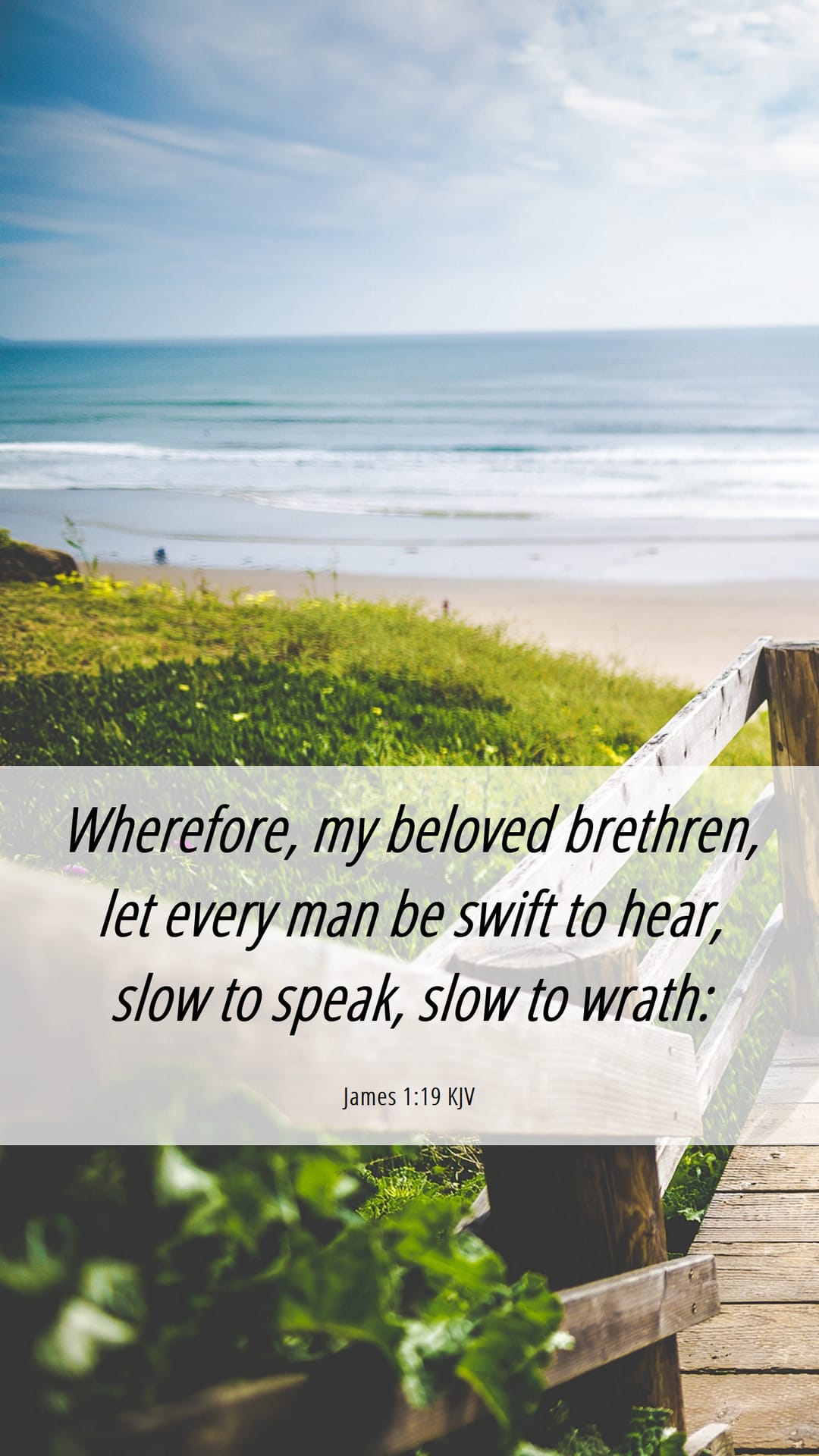
James 1:19 (KJV)
“Wherefore, my beloved brethren, let every man be swift to hear, slow to speak, slow to wrath:”
That verse is a direct challenge to natural instinct.
Most people are quick to speak.
Quick to explain.
Quick to defend.
Quick to assume.
Quick to react.
But Scripture points in another direction:
swift to hear, slow to speak, slow to wrath.
That is not weakness. That is spiritual strength.
Why Slowness Feels Weak
Many people struggle with this because slowness feels risky.
If I do not answer quickly, will I seem weak?
If I do not defend myself immediately, will I lose ground?
If I do not react, will people think they can treat me however they want?
💡 These fears are understandable. But many of them come from insecurity, not wisdom.
A person who is ruled by urgency usually feels that silence is dangerous. A secure person can slow down because their identity is not falling apart in the moment.
That is why slowness is a form of strength. It shows that your emotions are not your master and your ego is not steering the conversation.
Being Slow to Speak Protects You
Words spoken too quickly often become words regretted later.
A sentence you wish you could take back.
A tone that damaged trust.
A reaction that made everything worse.
A text sent while emotions were still hot.
This is why slowness matters so much.
When you are slow to speak, you give wisdom room to enter. You gain time to examine what you are actually feeling. You avoid saying the first thing that rises, which is often not the wisest thing available.
Being slow to speak does not mean you never speak. It means you speak after reflection, not before it.
That protects your relationships, your peace, and your witness.
Being Slow to Wrath Is Harder Than It Sounds
Anger moves fast.
It can rise in seconds through tone, disrespect, stress, disappointment, exhaustion, or feeling misunderstood. Once it rises, it wants expression. It wants action. It wants to discharge itself through words, volume, or force.
That is why being slow to wrath takes real strength.
It means you are not denying the anger. You are refusing to let it take the steering wheel. You are acknowledging what you feel without surrendering to it.
That is difficult work. But it is holy work.
And it often happens in very ordinary places:
- at home
- in marriage
- while parenting
- in a work meeting
- in traffic
- in text messages
- in moments where you feel slighted or overlooked
Strength is not only seen in crises. It is often seen in small moments of self-government.
Listening Is Stronger Than It Looks
James says to be swift to hear.
That matters because many people think listening is passive. It is not.
Real listening requires:
- humility
- patience
- emotional control
- a willingness not to interrupt
- a willingness to hear something uncomfortable without immediately striking back
Listening slows the reaction cycle. It makes room for clarity. It gives the other person dignity. And many times, it reveals that what first felt offensive may not have meant what you assumed.
A strong person can listen without panicking.
A wise person can hear without immediately fighting.
That kind of listening is deeply mature.
Strength Is Not Found in Volume
Some of the most fragile people are the quickest to speak and the quickest to anger. Not because they are evil, but because they have not learned how to govern themselves under pressure.
True strength does not need to prove itself by force.
It can wait.
It can listen.
It can lower its tone.
It can delay its reaction.
It can choose not to say everything it feels.
That is why restraint is stronger than many people realize.
Anyone can react.
Not everyone can rule their spirit.
What This Looks Like in Real Life
Being slow to speak and slow to wrath may look like:
taking a breath before responding
letting someone finish before interrupting
refusing to answer a harsh text immediately
choosing not to match another person’s anger
saying, “I need a moment before I answer”
asking a question instead of making an accusation
These things may feel small, but they reveal something powerful: you are no longer letting the moment fully control your response.
That is strength.
Final Thought
The world may celebrate quick reactions, strong opinions, and emotional force. But Scripture points to a deeper kind of strength.
Be swift to hear.
Slow to speak.
Slow to wrath.
That rhythm may look unimpressive to some people. But it reflects a heart being shaped by God. It shows that wisdom is stronger than urgency, and restraint is stronger than reaction.
So the next time you feel pressure rising, remember this:
You do not become stronger by speaking faster or getting angrier.
Sometimes you become stronger by slowing down.
Reflection Questions
- In what situations do I struggle most to be slow to speak?
- What usually makes my anger rise quickly?
- Do I associate speed with strength more than I should?
- What would change if I practiced slowness more intentionally?
Closing Prayer
Dear Lord,
Please teach me the strength of slowness. Help me be quick to hear, slow to speak, and slow to wrath.
Guard me from reactive words and impulsive anger. Build in me the quiet strength that listens, pauses, and responds with wisdom.
In Jesus’ name, amen 🙏