You Do Not Need the Last Word to Keep Your Worth

There is something deeply uncomfortable about walking away from a conversation when you still have more to say.
You were misunderstood.
Someone twisted your words.
They made an unfair accusation.
They walked away believing something about you that is not true.
Everything inside you wants to go back.
One more explanation.
One more correction.
One more message.
One final sentence that proves your point.
Because somewhere beneath the argument is often a deeper fear:
If I do not defend myself, what will they think of me?
💡 But your worth does not depend on winning the conversation. And you do not need the last word to keep it.
The Last Word Can Become a Search for Validation
Sometimes we tell ourselves we are pursuing clarity when we are really pursuing validation.
We need the other person to say:
“You were right.”
“I misunderstood you.”
“I see your point now.”
But people do not always give us that closure.
Some misunderstandings remain unresolved. Some people never acknowledge their part. Some conversations end before everything feels fair.
That can be painful.
But peace begins when you realize that another person’s opinion does not have the authority to define your value.
Psalm 139:1–2 (KJV)
“O Lord, thou hast searched me, and known me. Thou knowest my downsitting and mine uprising, thou understandest my thought afar off.”

God knows what others may misunderstand.
He knows your motives, your intentions, your weaknesses, and the truth of what happened. You do not have to exhaust yourself trying to make every person see you perfectly.
Silence Does Not Mean You Lost
We often treat conversations like competitions.
If someone speaks last, they won.
If you walk away, you surrendered.
If you do not answer an accusation, people might assume it was true.
But silence can be a form of strength.
Jesus Himself demonstrated this under intense accusation:
Matthew 27:13–14 (KJV)
“Then said Pilate unto him, Hearest thou not how many things they witness against thee? And he answered him to never a word; insomuch that the governor marvelled greatly.”

Jesus knew the truth about Himself.
He did not need to chase every accusation.
His silence was not insecurity. It came from authority.
👉 There are moments when continuing to argue actually gives another person too much control over your peace.
Ask Why You Need to Keep Talking
When you feel the urge to send one more message, pause.
Ask yourself:
- Am I trying to clarify, or am I trying to win?
- Have I already explained myself?
- Will another response create understanding, or simply restart the argument?
- Am I afraid of what this person will think if I stop defending myself?
These questions can expose where pride and insecurity are hiding.
Sometimes the conversation does need another response.
But sometimes you have already said enough.
Learning the difference is maturity.
Your Identity Is Not on Trial
The need for the last word often becomes powerful when we make the disagreement about our identity.
“If they think I was wrong, maybe I look weak.”
“If they misunderstand me, maybe I have lost their respect.”
💡 But your worth does not rise and fall with every human opinion.
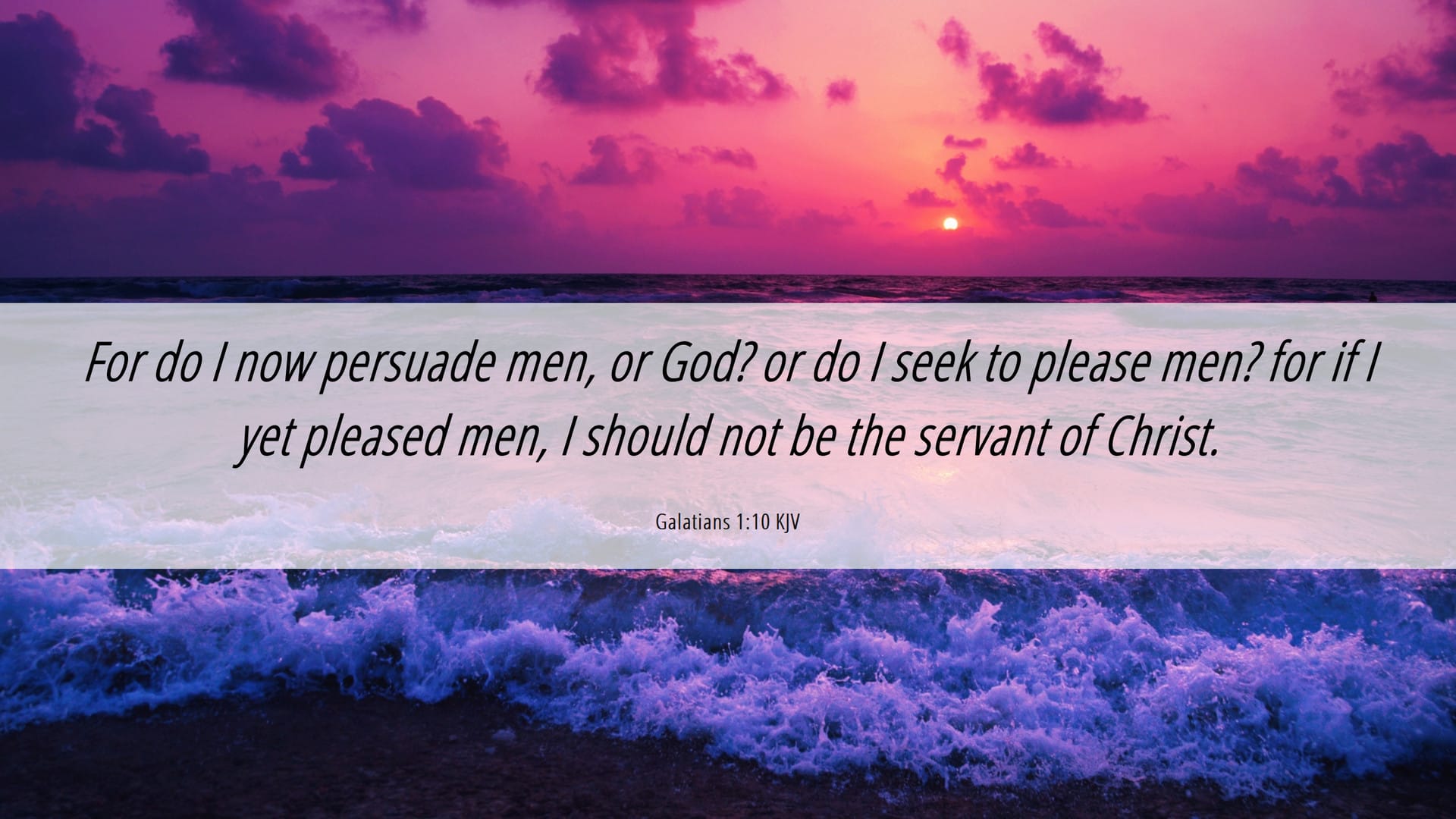
Galatians 1:10 (KJV)
“For do I now persuade men, or God? or do I seek to please men? for if I yet pleased men, I should not be the servant of Christ.”
There is freedom in remembering that you do not have to manage every perception.
You can explain yourself honestly.
You can apologize when needed.
You can correct something important.
And then you can release the outcome.
You are not responsible for forcing another person to agree with you.
Sometimes Peace Requires Leaving Something Unfinished
Not every argument receives a satisfying ending.
There may be no apology.
No acknowledgment.
No moment where everyone finally understands.
Sometimes peace comes from accepting that the conversation may remain unfinished.
You can walk away knowing:
“I spoke truthfully.”
“I tried to be gracious.”
“I owned what belonged to me.”
“I do not need to keep fighting for my worth.”
That is not defeat.
That is freedom.
Final Thought
You do not need the last word to prove who you are. You do not need every misunderstanding corrected or every accusation defeated. Sometimes strength looks like saying what is necessary and then becoming quiet.
Let God hold the parts you cannot control. Your value was never created by another person’s approval. And it cannot be taken away by their misunderstanding.
So when you feel desperate for one more response, pause. Perhaps you do not need another sentence. Perhaps you simply need to remember who you are.
Reflection Questions
- Why do I feel uncomfortable when I do not get the last word?
- Do I depend too much on other people understanding me correctly?
- Have I been continuing a conversation that wisdom is telling me to release?
- What would it look like to trust God with someone else’s opinion of me?
Closing Prayer
Dear Lord,
Please free me from the need to defend myself endlessly. When I am misunderstood, remind me that You know my heart completely.
Help me speak truth when necessary, remain humble when I am wrong, and become quiet when enough has been said.
Let my worth rest in You rather than in winning arguments or controlling what others think of me. Give me the peace to release what I cannot change.
In Jesus’ name, amen. 🙏