The Hidden Pride Behind Defensiveness

Defensiveness often feels like self-protection.
Someone points out a mistake.
Questions your decision.
Challenges your perspective.
Tells you that something you said or did hurt them.
And before you fully hear what they are saying, something rises inside you.
You explain.
You justify.
You correct their version.
You remind them of what they did wrong too.
It may feel like you are simply defending the truth.
But sometimes something deeper is happening.
Sometimes defensiveness is pride trying to protect the image we have of ourselves.
Pride Does Not Always Look Arrogant
When we think of pride, we often imagine someone boastful or obviously self-important.
But pride can be much quieter.
It can sound like:
“I did not do anything wrong.”
“That is not what I meant.”
“You are taking it the wrong way.”
“Well, you do the same thing.”
These statements may occasionally be true. But when they appear automatically every time someone challenges us, they may reveal something deeper.
Pride struggles to tolerate being wrong. It wants to protect reputation, competence, and the way others see us.
Scripture says:
Proverbs 11:2 (KJV)
“When pride cometh, then cometh shame: but with the lowly is wisdom.”

Humility creates room for wisdom because it allows us to consider something pride immediately rejects:
Maybe there is something here I need to hear.
Defensiveness Can Keep You From Growth
Correction is uncomfortable. No one enjoys hearing that their words hurt someone or that they handled something poorly. But if your first response is always defense, you may miss an opportunity for growth.
Sometimes the most mature response is simply:
“Tell me more.”
“I did not realize it came across that way.”
“I need to think about what you said.”
Those words do not mean the other person is automatically right about everything.
They mean you are secure enough to listen before deciding.
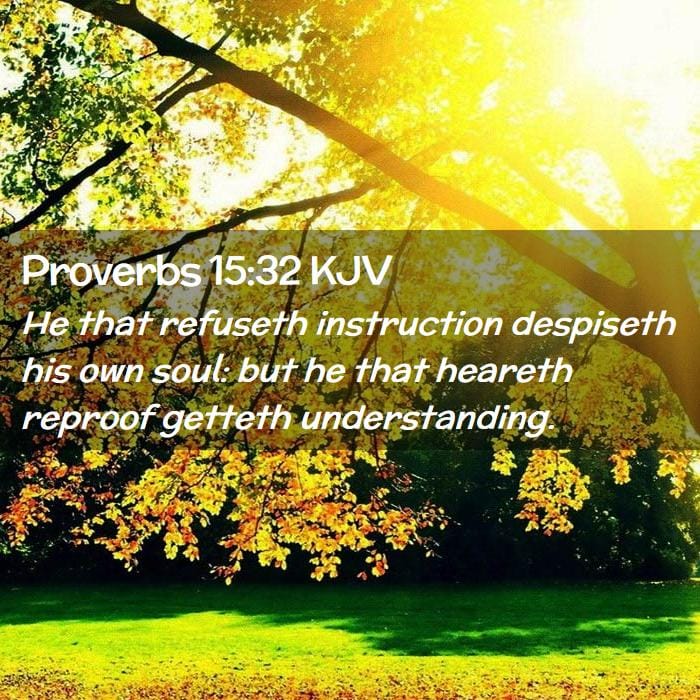
Proverbs 15:32 (KJV)
“He that refuseth instruction despiseth his own soul: but he that heareth reproof getteth understanding.”
Correction can sting and still contain something useful.
Humility listens long enough to find it.
Intent Does Not Erase Impact
One of the most common forms of defensiveness is focusing entirely on intention.
“I did not mean to hurt you.”
That may be completely true. But good intentions do not automatically remove painful impact. If someone says your tone hurt them, you do not always need to prove that you meant nothing wrong. Sometimes wisdom simply says:
“I am sorry it came across that way.”
You can clarify intention later. But first, acknowledge impact.
Defensiveness asks, “How do I prove I am not wrong?”
Humility asks, “What happened here, and what can I learn?”
That shift can save relationships.
Pride Wants the Last Word
Defensiveness often becomes strongest when we feel misunderstood. We want to explain every detail until the other person finally agrees with our version. But there are moments when you have already explained enough. Continuing to defend yourself may no longer be about clarity. It may be about needing to win.
Scripture gives us an important warning:
James 4:6 (KJV)
“But he giveth more grace. Wherefore he saith, God resisteth the proud, but giveth grace unto the humble.”

Grace meets humility.
That means spiritual growth sometimes begins with surrendering the need to appear completely right.
You can survive being misunderstood.
You can survive admitting a mistake.
You can apologize without losing your worth.
In fact, humility often makes you stronger, not smaller.
Ask What You Are Protecting
The next time defensiveness rises, pause and ask:
- What am I protecting right now?
- My reputation?
- My need to be right?
- My fear of looking foolish?
- My desire to be seen as a good person?
These questions can reveal what is happening beneath the argument. Sometimes your strongest defense is not protecting truth. It is protecting ego. And once you see that honestly, you can bring it before God.
Final Thought
Defensiveness feels protective, but it can quietly keep you trapped.
It can prevent apologies.
Block correction.
Turn small issues into bigger conflicts.
Keep you from seeing yourself clearly.
Humility offers another way.
Listen before explaining.
Consider before correcting.
Own what belongs to you.
You do not need to defend every imperfection.
God already knows your weaknesses, and He is not asking you to maintain a flawless image. He is asking you to grow.
Sometimes the strongest response is not:
“Let me explain why I am right.”
Sometimes it is:
“Lord, show me what I need to see.”
Reflection Questions
- What situations make me defensive most quickly?
- Do I listen to correction, or immediately explain myself?
- What am I usually trying to protect when I become defensive?
- Is there something I need to acknowledge or apologize for without adding excuses?
Closing Prayer
Dear Lord,
Please reveal the pride that hides behind my defensiveness. Give me humility to listen, courage to admit when I am wrong, and wisdom to receive correction without feeling that my worth is threatened.
Help me care more about growth than protecting my image, and make my heart teachable before You and others.
In Jesus’ name, amen. 🙏