Why Social Media Trains Your Soul to React Too Fast

Social media was designed for speed.
Scroll quickly.
React instantly.
Comment immediately.
Share before the moment passes.
Form an opinion before reading the full story.
Everything encourages movement. Notifications demand attention. Headlines compete for emotion. Algorithms reward content that shocks, angers, frightens, or divides. The stronger the reaction, the more likely people are to click, comment, and share.
Over time, this environment does more than influence how you use a phone.
👉 It begins training your soul.
You become quicker to judge, quicker to assume, quicker to argue, and slower to listen. You begin carrying the rhythm of social media into your conversations, relationships, and spiritual life.
Without realizing it, you may become very practiced at reacting and increasingly uncomfortable with reflection.
Social Media Rewards Emotional Speed
Most social media platforms are not built to encourage careful thought. They are built to keep your attention.
Calm content is easy to pass over. Outrage is harder to ignore. A thoughtful explanation may receive little attention, while a cutting response travels quickly.
This creates a powerful habit.
You see something.
You feel something.
You respond.
There is little space between stimulus and reaction.
But wisdom usually requires space. It needs time to ask questions, examine motives, understand context, and consider consequences. Social media often removes that space by making every issue feel immediate.
You may begin believing that because something feels urgent, it requires an instant response.
It usually does not.
Bible Verse
James 1:19 (KJV)
“Wherefore, my beloved brethren, let every man be swift to hear, slow to speak, slow to wrath:”
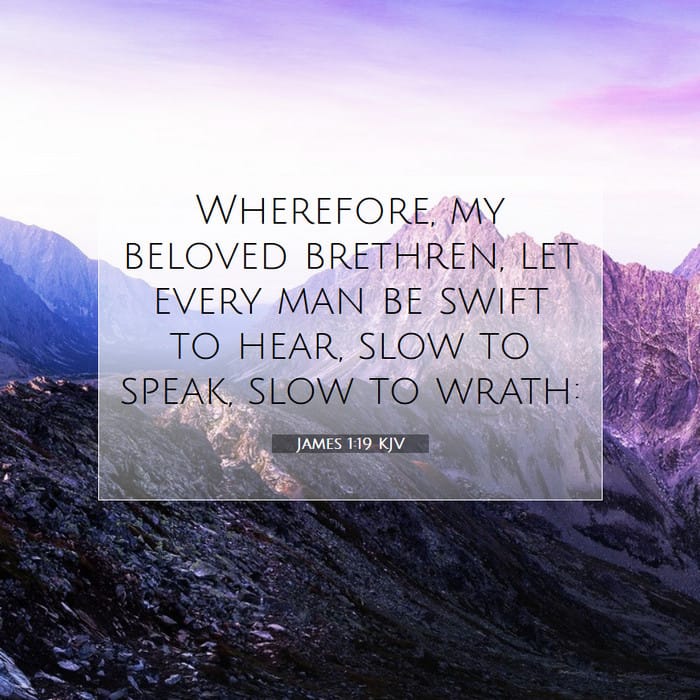

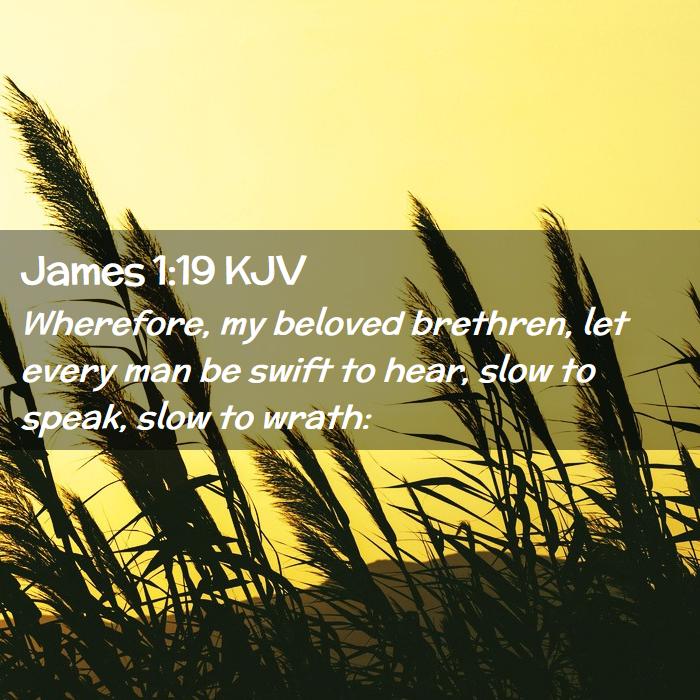
This verse presents a rhythm that is almost completely opposite to the rhythm of social media.
💡 Social media teaches us to be swift to speak and swift to wrath. Scripture teaches us to be swift to hear.
Listening comes first.
Speaking comes slowly.
Anger comes even more slowly.
That order protects us from saying things before we understand, condemning people before we know the full story, and allowing emotional intensity to replace wisdom.
Your Reactions Become Habits
Every time you respond impulsively online, you practice impulsive response.
You may think, “It is only a comment,” or “It is only social media.” But repeated actions shape habits, and habits eventually shape character.
If you repeatedly react to posts without reflection, you may find yourself doing the same thing in real life.
You interrupt more quickly.
You become more defensive when corrected.
You assume motives without asking questions.
You feel pressure to answer immediately.
Silence begins to feel uncomfortable.
What you repeatedly practice online does not always remain online.
⚠️ The soul does not have a separate setting for digital behavior. The impatience you rehearse behind a screen can become impatience at home, at work, and in relationships.
Outrage Can Become Emotionally Addictive
Anger creates energy.
It makes you feel alert, certain, and powerful. It can provide a temporary sense of purpose. When a post makes you angry, reacting may feel like doing something meaningful.
But not every emotional response is spiritual discernment.
Sometimes outrage is simply outrage.
It may feel righteous while producing bitterness, pride, contempt, and division. You can become so accustomed to looking for what is wrong that you lose the ability to notice what is good.
You can also begin measuring faithfulness by how strongly you react rather than by how wisely you respond.
But emotional intensity is not proof of spiritual maturity.
You can feel strongly and still respond foolishly.
Social Media Encourages Instant Judgment
Online, you rarely see the whole person.
You see one sentence.
One photograph.
One video clip.
One opinion.
One mistake.
Yet from that limited information, it is easy to form a complete judgment about someone’s character, motives, faith, or intelligence.
Social media gives fragments while encouraging conclusions.
Wisdom resists that pressure.
A wise person remembers that context may be missing. They recognize that people are more complicated than one post. They understand that a short clip may not tell the whole story.
This does not mean truth no longer matters. It means truth should be pursued carefully rather than assumed quickly.
Not Every Post Deserves Your Response
One of the healthiest digital disciplines is learning that you do not have to respond to everything.
You do not have to correct every stranger.
You do not have to enter every argument.
You do not have to defend every opinion.
You do not have to prove what you know.
You do not have to give every irritation a public voice.
Silence online can be an act of self-control.
Before commenting, ask:
- Do I understand enough to speak?
- Am I trying to help, or am I trying to win?
- Would I say this to the person face-to-face?
- Does this response reflect patience and grace?
- Will this conversation produce anything good?
Sometimes the wisest response is no response.
The P.A.W.S. Framework for Digital Life
The P.A.W.S. Framework can help create space between what you see and what you do next.
Pause
Do not comment, repost, or send immediately. Give the emotion time to settle.
Acknowledge
Name what the content stirred in you. Anger? Fear? Pride? Insecurity? The desire to prove yourself?
Weigh
Consider whether your response is truthful, necessary, gracious, and likely to produce something worthwhile.
Speak with Grace
Respond thoughtfully—or choose silence.
This simple process interrupts the speed social media tries to create.
Retraining Your Soul for Slowness
If social media has trained you to react too quickly, your soul can be retrained.
Create moments without your phone.
Read complete articles instead of reacting to headlines.
Wait before commenting on emotional subjects.
Pray before joining controversial conversations.
Choose long-form reading over endless scrolling.
Spend time in Scripture without switching between notifications.
These practices teach your mind that not everything is urgent.
They restore attention.
They deepen patience.
They make room for prayer.
They help you become more thoughtful both online and offline.
Final Thought
Social media is not automatically evil. It can connect people, spread encouragement, share truth, and create meaningful opportunities.
But it should not be allowed to train your soul without your awareness.
A platform built for speed can make you impatient.
A culture built on outrage can make you harsh.
A feed built on instant reaction can make reflection feel unnatural.
You do not have to accept that training.
You can slow down. You can listen longer. You can refuse unnecessary arguments. You can choose wisdom over speed and grace over outrage.
The world may keep scrolling quickly.
Your soul does not have to.
Reflection Questions
- Do I react differently online than I would in person?
- What kind of content triggers my fastest reactions?
- Have online habits made me more impatient or defensive offline?
- What digital boundary would help me become slower to speak and slower to wrath?
Closing Prayer
Dear Lord,
Please help me guard my heart and my words in the digital world. Keep me from reacting before I understand and speaking before I have listened.
Give me wisdom to know when to respond and when to remain silent. Train my soul in patience, humility, and grace, and let my online presence reflect the character of Christ.
In Jesus’ name, amen 🙏