When Not Responding Is the Most Powerful Response

We often assume that every comment deserves an answer.
Every accusation must be corrected.
Every misunderstanding must be explained.
Every insult must be confronted.
Every argument must be finished.
But sometimes the most powerful response is no response at all.
Silence is not always weakness. Sometimes it is wisdom refusing to be pulled into confusion, anger, or unnecessary conflict. It is the strength to recognize that not every conversation is productive and not every person is ready to listen.
Silence Can Protect Your Peace
When emotions are high, words can quickly make a difficult situation worse. Responding too soon may feel satisfying, but it often creates more tension, more misunderstanding, and more regret.
Scripture reminds us:
Proverbs 17:27 (KJV)
“He that hath knowledge spareth his words: and a man of understanding is of an excellent spirit.”

A wise person does not feel compelled to say everything they think. They understand that words have weight and that restraint can preserve peace.
Sometimes silence gives your heart time to settle. It allows anger to cool, assumptions to weaken, and wisdom to take the place of impulse.
Jesus Did Not Answer Every Accusation
Jesus demonstrated powerful restraint when He was falsely accused.
Matthew 27:12–14 (KJV)
“And when he was accused of the chief priests and elders, he answered nothing. Then said Pilate unto him, Hearest thou not how many things they witness against thee? And he answered him to never a word; insomuch that the governor marvelled greatly.”
His silence was not fear. It was authority.
Jesus did not need to defend Himself against every false statement. He knew who He was, He knew the truth, and He trusted the Father.
💡 That kind of silence requires inner stability. When your identity is secure in God, you do not have to chase every misunderstanding or fight for the last word.
Not Responding Is Not the Same as Avoidance
Silence is not always the right response.
There are times to speak truth, establish boundaries, address harm, or clarify a serious misunderstanding. Silence should never be used to manipulate, punish, or avoid responsibility.
But wisdom knows the difference between a conversation that needs courage and one that only wants conflict.
Before responding, ask:
- Will this conversation produce understanding?
- Is the other person willing to listen?
- Am I speaking from wisdom or wounded pride?
- Will my response bring peace or simply prolong the argument?
Sometimes the strongest answer is to step away and revisit the issue later.
You Do Not Need the Last Word
The desire for the last word often comes from pride. We want to leave the conversation feeling victorious, understood, or proven right.
But peace is often more valuable than verbal victory.
Proverbs 26:4 (KJV)
“Answer not a fool according to his folly, lest thou also be like unto him.”
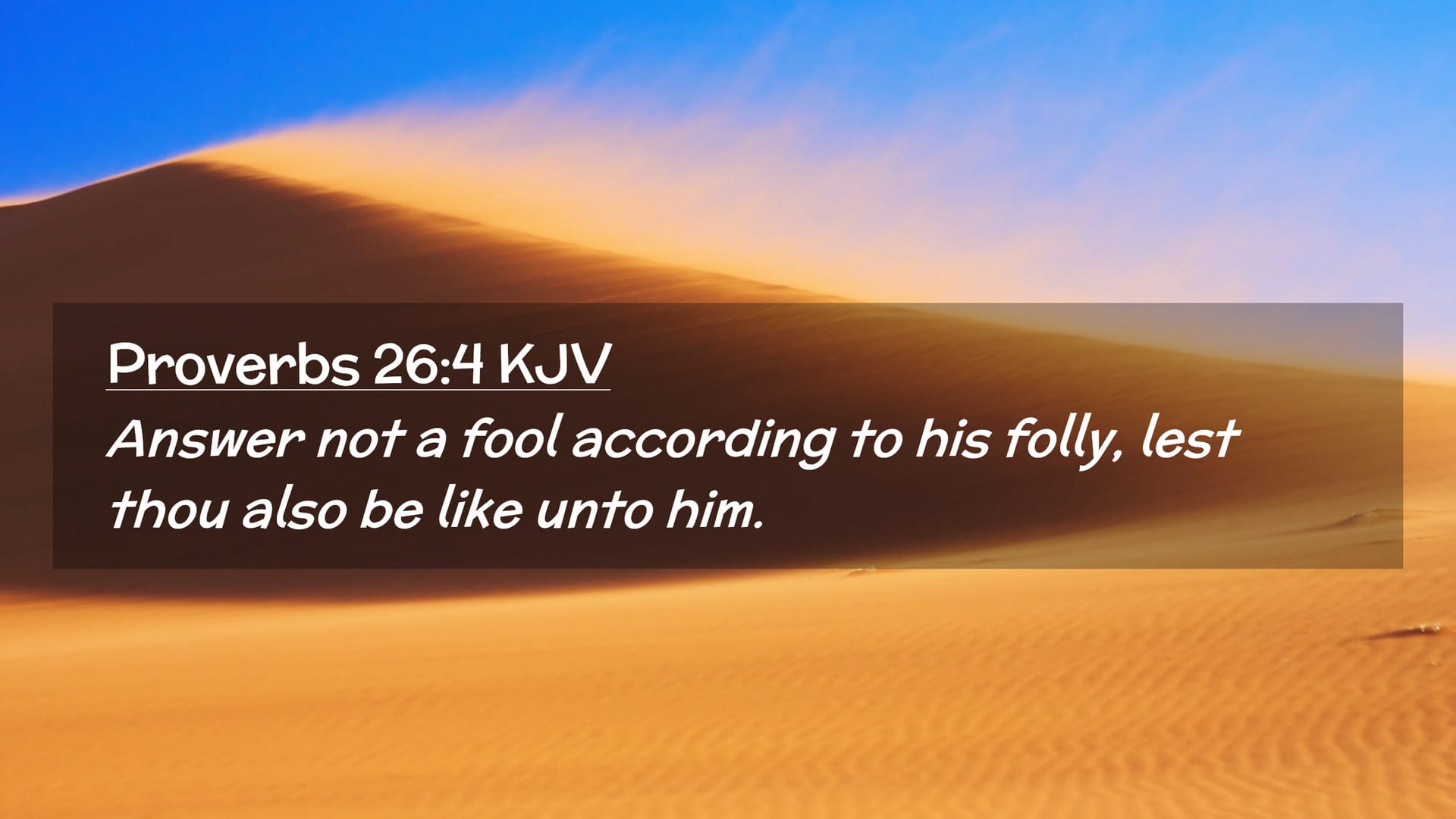
Some arguments pull you into the very behavior you are trying to correct. By continuing to engage, you may become harsher, more defensive, and less reflective of Christ.
There are moments when walking away protects your character better than continuing to speak.
Final Thought
Not responding does not mean you have nothing to say.
It may mean you have enough wisdom to know that this is not the right time, the right spirit, or the right conversation.
Silence can protect your peace.
It can prevent escalation.
It can preserve your dignity.
It can show that your emotions do not control you.
You do not have to answer every accusation, correct every opinion, or win every argument.
Sometimes the most powerful response is a quiet one.
Reflection Questions
- Do I feel pressure to answer every criticism or misunderstanding?
- When has responding too quickly made a situation worse?
- Is there a current conflict where silence or delay would be wiser?
- Do I want resolution, or do I simply want the last word?
Closing Prayer
Dear Lord,
Please give me the wisdom to know when to speak and when to remain silent. When I feel misunderstood, falsely accused, or tempted to defend myself, quiet the emotions within me and help me place the situation into Your hands.
Keep me from responding out of pride, anger, fear, or the need to have the last word. Guard my heart from bitterness and my mouth from words I may later regret. Teach me to trust that You see what others do not see, You know the truth of every situation, and You are able to defend me in ways I never could.
Let my silence never come from resentment, avoidance, or a desire to punish others. Instead, let it be guided by peace, humility, self-control, and wisdom. Give me courage to speak when truth and love require it, and grace to remain quiet when my words would only deepen the conflict.
When the time to speak comes, please fill my mouth with gentleness, patience, and compassion. May my words bring healing rather than harm, clarity rather than confusion, and peace rather than division. Help me reflect the character of Jesus in both my silence and my speech.
Lord, calm my heart, protect my peace, and remind me that I do not have to answer every accusation or correct every misunderstanding. My identity is secure in You, and Your approval is enough for me.
In Jesus’ name, amen. 🙏