The Spiritual Danger of Always Having Something to Say

We live in a world where silence can feel almost suspicious.
Everyone has an opinion.
Everyone has a reaction.
Everyone has a comment.
And social media gives us a place to share it instantly.
💡 But constantly having something to say can become spiritually dangerous. Not because speaking is wrong. Because speaking too often can train us to value expression more than reflection.
We begin to believe that every thought deserves a voice, every disagreement deserves a response, and every issue requires our opinion.
But Scripture teaches something quieter.
Sometimes wisdom speaks.
Sometimes wisdom waits.
Too Many Words Create More Opportunities for Sin
The Bible is very direct about this:
Proverbs 10:19 (KJV)
“In the multitude of words there wanteth not sin: but he that refraineth his lips is wise.”

👉 The more we speak, the more opportunities we create for exaggeration, gossip, pride, careless criticism, and words we later regret.
That does not mean silence is always better.
It means restraint matters.
A wise person does not feel compelled to fill every silence or respond to every issue.
They know that not every thought needs to leave the mind.
Constant Talking Can Make Listening Difficult
When you are always preparing your next response, you stop listening well.
You may hear words without truly hearing the person.
You wait for your turn.
You prepare your defense.
You think about what you want to say next.
But Scripture gives us a different rhythm:
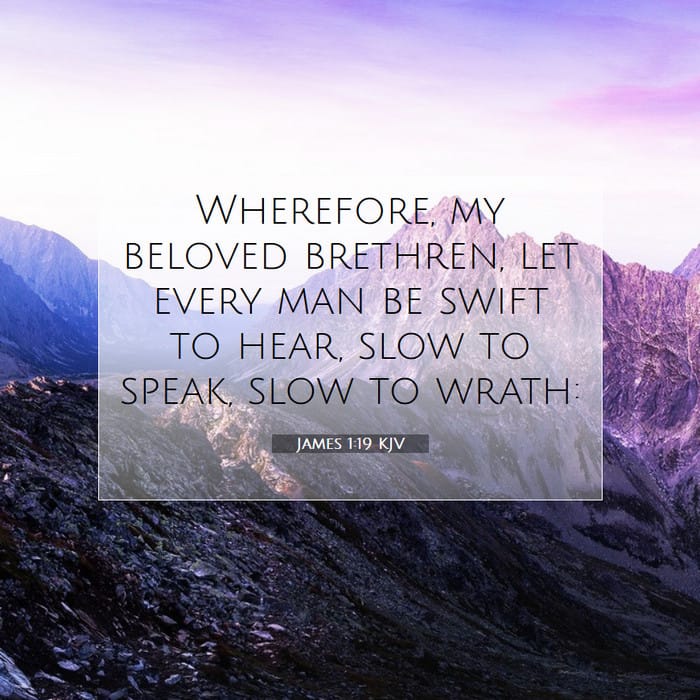
James 1:19 (KJV)
“Wherefore, my beloved brethren, let every man be swift to hear, slow to speak, slow to wrath:”
Notice what comes first.
💡 Hearing.
Listening requires humility because it means temporarily setting aside your own voice.
Sometimes spiritual maturity is shown not by how much wisdom you can say, but by how much wisdom you are willing to hear.
Having an Opinion Can Become Part of Your Identity
There is another danger in always having something to say.
You may begin to feel important because you have an opinion on everything.
You become known as the person who always knows, always corrects, always responds.
Over time, speaking can become less about helping and more about proving.
Proving that you are informed.
Proving that you are right.
Proving that you see what others missed.
That is where pride can hide inside communication.
It may look like confidence, but sometimes it is a heart that has forgotten how to be quiet.
Silence Gives God Room
There is something spiritually healthy about quiet.
Quiet gives you room to examine your motives. It gives you time to ask whether your words are necessary. It gives you space to pray before responding.
Scripture says:
Ecclesiastes 3:7 (KJV)
“A time to rend, and a time to sew; a time to keep silence, and a time to speak;”

Both are necessary.
The spiritually mature person learns the difference.
They know when truth must be spoken.
But they also know when another sentence will add nothing.
Not Every Correction Is Yours to Give
💡 One of the hardest disciplines is realizing that you do not have to correct everything you see.
Someone may be wrong. But that does not automatically make you responsible for correcting them.
Before speaking, ask:
- Is this my responsibility?
- Will this help?
- Do I understand enough?
- Is my motive love or irritation?
- Would silence actually be wiser?
Sometimes we speak because we cannot tolerate letting something pass.
👉 But spiritual maturity includes learning which battles belong to us.
Silence Can Expose What Is Inside You
Try staying quiet when you desperately want to speak.
You may discover something.
Maybe you want the last word.
Maybe you want recognition.
Maybe you are uncomfortable not being heard.
Maybe you want to control how others think.
Silence can reveal these things because it removes the outlet.
That is why quiet can become a spiritual discipline.
It teaches you that you do not need to express every emotion in order to process it.
👉 Some things belong in prayer before they belong in conversation.
Final Thought
Your voice matters. But your silence can matter too. There are moments when words encourage, correct, comfort, and bring truth. And there are moments when words simply add noise.
Spiritual maturity is not having an answer for everything. Sometimes it is knowing that you do not need one.
Speak when wisdom requires it.
Listen when someone else needs to be heard.
And when nothing good will be added, allow yourself to be quiet.
Because sometimes the most spiritually powerful thing you can say is nothing at all.
Reflection Questions
- Do I feel uncomfortable when I have nothing to say?
- Am I truly listening, or mostly waiting for my turn to speak?
- Do I sometimes correct people because I want to help, or because I want to be right?
- What conversation in my life may need fewer words right now?
Closing Prayer
Dear Lord,
Please teach me wisdom in both speech and silence. Keep me from speaking simply because I want to be heard.
Help me listen more carefully, examine my motives, and know when my words are truly needed.
Guard me from pride, careless speech, and unnecessary opinions. Let my voice serve truth and grace, and give me peace when wisdom calls me to remain quiet.
In Jesus’ name, amen. 🙏