How God Grows Patience in People Who Feel Everything Deeply
Some people do not move through life lightly.
They feel things deeply.
They notice tone quickly.
They sense shifts in people.
They carry conversations in their minds long after they end.
They are deeply affected by words, disappointment, tension, rejection, and emotional atmosphere.
If that sounds like you, you may have asked yourself before:
“Why do I react so strongly?”
“Why do small things feel big to me?”
“Why is patience so hard when I feel everything this deeply?”
The answer is not always that you are immature. Sometimes it is simply that you are sensitive, tenderhearted, and highly aware. That can be a gift. Deep feelers often love deeply, care deeply, and discern deeply.
But deep feeling also creates a challenge.
When you feel everything intensely, patience can feel unnatural.
Feeling Deeply Is Not the Problem
It is important to say this clearly: feeling deeply is not a flaw.
God created people with different temperaments, different sensitivities, and different ways of processing life. Some people are naturally steady and less emotionally reactive. Others feel things with immediate intensity. Neither type is more loved by God.
The issue is not whether you feel deeply.
The issue is whether your feelings are leading you or whether God is teaching you how to bring those feelings under His care.
Deep emotion becomes dangerous when it takes control of your words, your assumptions, your tone, and your timing.
But deep emotion becomes beautiful when it is surrendered and shaped by God.
A deeply feeling person can become deeply patient.
That process just takes formation.
Patience Is Usually Grown, Not Granted Instantly
Most people want patience to appear quickly.
They want God to remove the emotional intensity, calm the frustration, and make difficult people easier to deal with. But that is usually not how patience grows.
Patience is often developed in the very situations where you feel most stretched.
In waiting.
In misunderstanding.
In delay.
In disappointment.
In being overlooked.
In dealing with difficult people.
In not being able to fix something immediately.
God often grows patience not by removing the tension, but by teaching you how to remain steady inside it.
That can feel frustrating at first. But it is deeply purposeful.
God is not just trying to make your life easier. He is shaping your character.
Why Deep Feelers Struggle With Patience
If you feel everything deeply, patience can be hard because your internal experience is often intense.
A small comment may feel heavy.
A long silence may feel personal.
A change in someone’s tone may stir anxiety.
A delay may feel like rejection.
A misunderstanding may replay in your mind all day.
By the time someone else sees your reaction, you may already have gone through a whole internal storm.
That is why patience is not just about “waiting calmly.” For deep feelers, patience often involves learning how not to believe every emotional urgency the moment it rises.
Not every feeling is false. But not every feeling is a trustworthy leader.
Sometimes what you feel is real but incomplete. Sometimes it needs prayer before interpretation. Sometimes it needs time before response.
That is where growth begins.
God Is Gentle With Tender Hearts
One of the most comforting truths is that God is not harsh with people who feel deeply.
He is not annoyed by your sensitivity.
He is not frustrated that you feel strongly.
He is not asking you to become cold, detached, or emotionally numb.
👉 He understands your wiring better than you do.
He knows what touches your heart. He knows what overwhelms you. He knows where you are tender, where you are tired, and where you are easily stirred.
And instead of shaming you, He teaches you.
He teaches you to slow down.
He teaches you to breathe before speaking.
He teaches you not to assume too quickly.
He teaches you to bring your feelings to Him instead of letting them spill everywhere.
His goal is not to harden your heart.
It is to steady it.
Bible Verse About This Kind of Growth
Here is a powerful verse that speaks directly into this process:
James 1:19 (KJV)
“Wherefore, my beloved brethren, let every man be swift to hear, slow to speak, slow to wrath:”
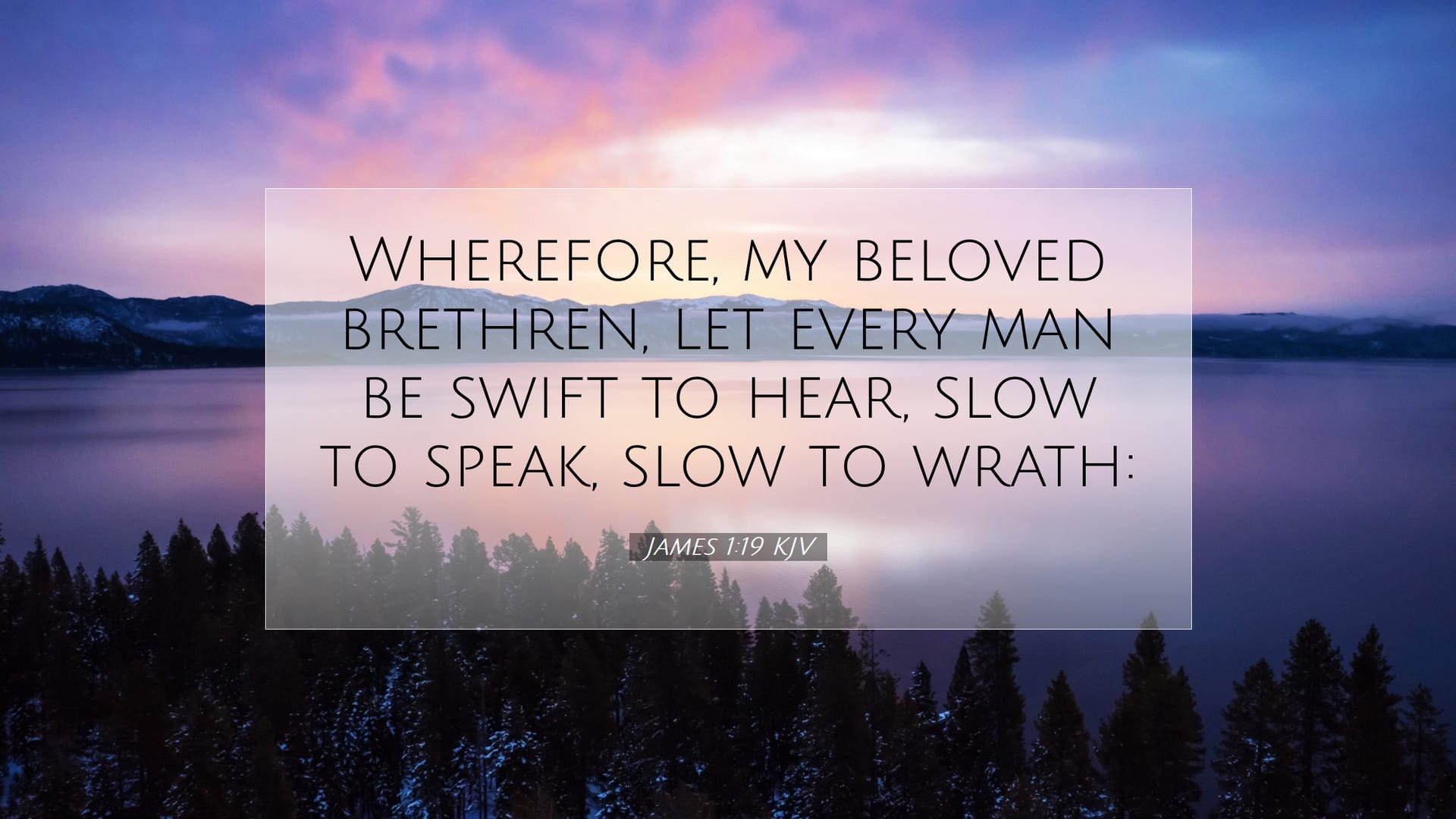

That verse is simple, but it is deeply important for people who feel everything deeply.
Be swift to hear.
Slow to speak.
Slow to wrath.
That does not mean your feelings do not matter. It means your feelings do not have to become your first response.
For deep feelers, this verse is an invitation to let listening become stronger than reacting, and to let slowness become a form of wisdom.
How God Actually Grows Patience
God often grows patience in layers.
First, He grows awareness.
You begin to notice your patterns. You realize what triggers you, what makes you rush, what makes you assume, and what situations make your emotions rise the fastest.
Then He grows pause.
Instead of reacting immediately, you begin to wait. Maybe only for a few seconds at first. But those seconds matter. They create room for wisdom.
Then He grows trust.
You begin to realize that you do not have to solve every uncomfortable emotion instantly. You do not have to answer every fear. You do not have to react to every shift in tone. You can trust God enough to slow down.
Then He grows steadiness.
Over time, situations that once would have thrown you completely off balance begin to lose some of their power. Not because you feel nothing, but because you are learning how to carry your feelings differently.
That is patience.
Patience Does Not Mean You Stop Feeling
Many people think patience means becoming emotionally flat. But that is not true.
Patience does not erase emotion.
It governs emotion.
You may still feel hurt, but you do not lash out.
You may still feel overlooked, but you do not spiral immediately.
You may still feel frustrated, but you do not let frustration choose your words.
You may still feel sorrow, but you bring it to God before you turn it into reaction.
That is mature patience.
It is not fake calmness. It is surrendered steadiness.
What This Looks Like in Real Life
For someone who feels everything deeply, patience might look like:
- waiting before replying to a text that upset you
- choosing not to interpret silence too quickly
- praying before confronting someone
- recognizing when your exhaustion is amplifying your emotions
- asking questions instead of assuming the worst
- giving yourself time to settle before speaking
- trusting God with what you cannot resolve immediately
These things may seem small, but they are not small at all.
They are signs that God is teaching your heart a new rhythm.
Final Thought
If you feel everything deeply, do not despise the way you are wired.
Just invite God into it.
He can teach a tender heart how to become a steady heart. He can teach a sensitive soul how to become patient without becoming hard. He can help you feel deeply without being ruled deeply by every passing emotion.
Patience is not proof that you stopped caring.
It is proof that God is teaching you how to carry what you care about with greater wisdom.
So if growth feels slow, take heart.
God is not just making you wait.
He is making you steadier.
Reflection Questions
- What situations test my patience most quickly?
- Do I tend to assume too much when I feel hurt?
- How is God inviting me to slow down before reacting?
- What would patience look like in one current relationship?
Closing Prayer
Dear Lord,
You know how deeply I feel and how quickly my emotions can rise. Thank You for being gentle with me. Teach me patience.
Help me slow down, trust You more, and respond with wisdom instead of urgency. Steady my heart without hardening it, and grow in me the kind of patience that reflects Your peace.
In Jesus’ name,
Amen.